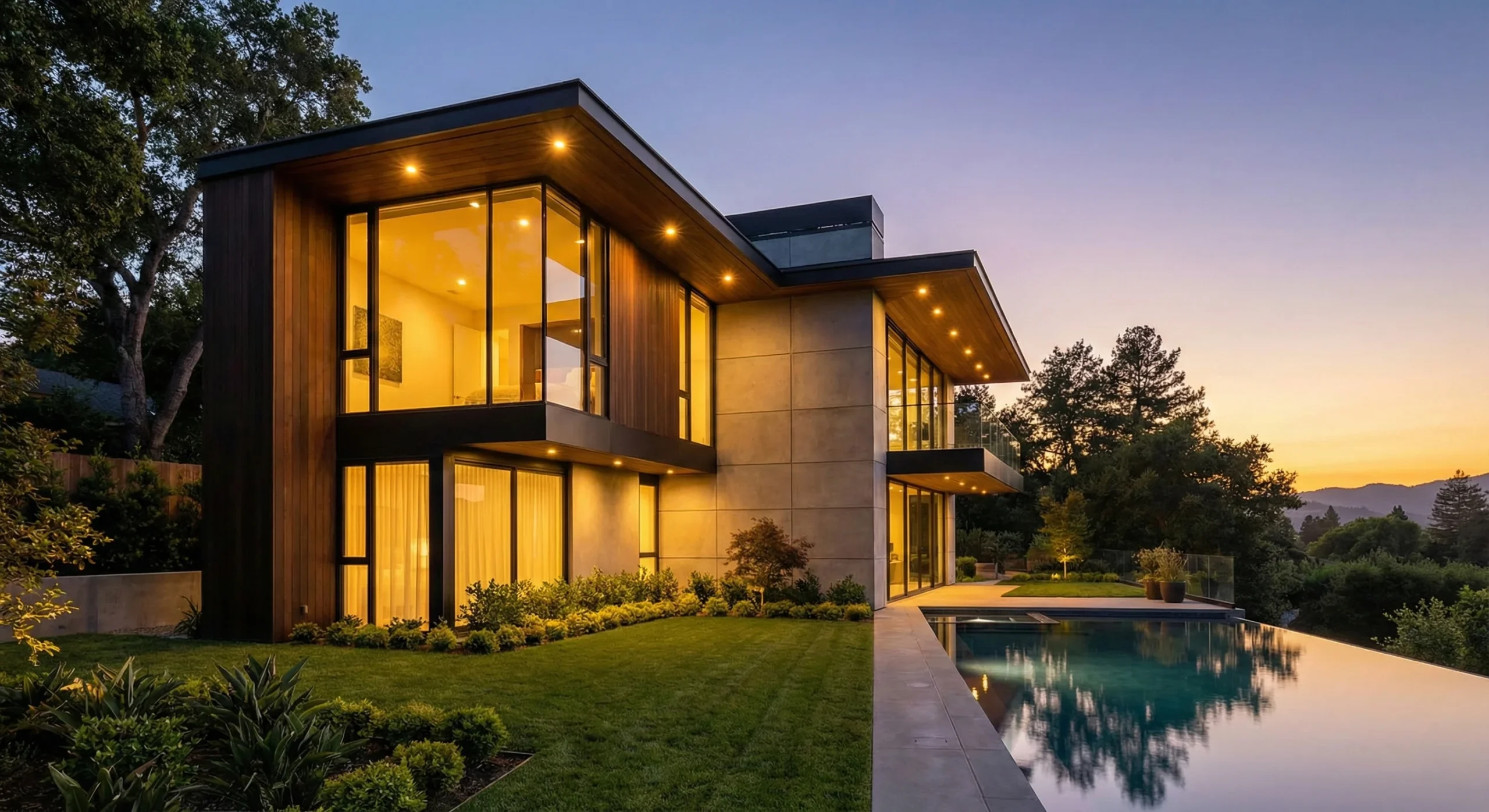
This article explains how 3D rendering cost savings help clients avoid expensive construction mistakes before building starts. A building’s physical appearance is one of the most significant financial investments. This holds true for both individuals and businesses. In this industry, building correctly is crucial. Errors or failures can cost a fortune. Architects have relied on 2D blueprints and sketches for years. Although technically accurate, they create a gap between what the client understands and the architect’s vision.
Costly mistakes occur in this gap. “I thought it would be Different” is the Most Expensive Sentence You Can Say!! In addition, Due to the Availability of 3D Rendering, we no longer have to rely on Guess-Work in Construction.
One of the biggest advantages of 3D rendering cost savings is eliminating design mistakes before construction.
3D Rendering has revolutionized planning and construction. It provides a clear, accurate view of what will be built. Many people who are Critical of 3D Rendering see it Only as an Added Expense or as an Advertising Tool; however, 3D Rendering is a Tool for Financial Protection. 3D Rendering Provides Greater Clarity, Accuracy, and Cost-Effective Planning, there is No Reason Why Money should be spent on Trial & Error Decisions made after the project has been Built. 3D Rendering Gives Clients Power to Make Smart Decisions that Will Ultimately Keep Their Budgets from Being Ripped Off by Trial & Error after the Project Starts Construction.
Costly Construction Mistakes That Happen Without 3D Rendering Visualization
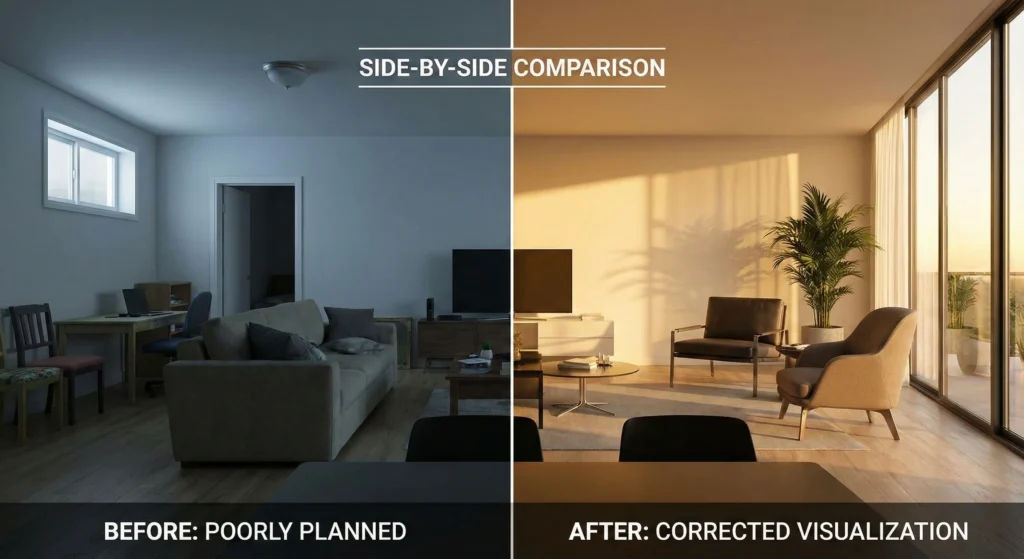
These 3D rendering cost savings directly protect clients from budget overruns.
To appreciate how valuable 3D rendering can be, it is important to understand the financial risk of constructing a project without 3D rendering. Transitioning from a set of two-dimensional (2D) drawings directly into construction can create many potential problems that are discovered only after starting the build process.
Without a realistic visualization, clients and contractors often face:
- Wrong Room Sizes: A room that looked spacious on paper may feel claustrophobic in reality.
- Improper Lighting Direction: Windows positioned incorrectly can result in glaring sun in the morning or pitch-black corners in the afternoon.

- Mismatched Aesthetics: That shade of beige paint might look terrible next to the selected wood flooring—a clash you only notice after the paint has dried.
- Furniture Spacing Issues: Standard furniture might not fit through doorways or might block essential walkways.
- Unexpected Structural Changes: Beams or columns may appear in places that ruin the interior flow.
The Client Change Order is often the most expensive mistake on a job site. This happens when a client walks onto a framed or partially finished site and finds it does not match their expectations. At that point, any changes will require new materials. They will also cause extra demolition, labor loss, and delays in completion.
As an example, imagine you build a custom kitchen island. You pour the concrete and install the marble top, only to realize it blocks the pathway from the fridge to the stove. Repairing this mistake requires removing the kitchen island and starting over. If you had created a 3D rendering prior to the physical build you would have seen this flaw based upon the images and could have corrected it without any cost.
How 3D Rendering Cost Savings Avoid Costly Revisions
The basic principle of construction economics is that “cheap paper” equals expensive concrete. This is even more true now in the Digital Age, where pixels are exceedingly cheaper than paper.
3D Renderings provide a fully represented, photorealistic environment for a project before any construction. A 3D Rendering serves as a digital mock-up for all aspects of the building process. The design of the building can still be altered during this design phase; for example, if the window is too close to a wall or if the height of the ceiling is too low, these issues can be resolved in a matter of clicks on a mouse.
Clients can quickly recognize potential flaws with the final high-resolution view. Clients can identify where an open-concept space displays kitchen clutter or that one staircase takes up too much floor area. These renders greatly improve the contractor’s understanding of the project. Since they are an accurate visual representation. A two-dimensional floor plan only shows the contractor where to place walls. The render shows how the final product should appear, how the detailed joints look, and how textures align. This improved level of detail results in fewer field mistakes and better coordinating between trades. The savings from reducing demolition, rework, and material waste represent a tremendous financial benefit. Hence, modern design is characterized by its precision.: “Correcting a mistake in a render takes seconds; correcting it on-site takes money.”
How 3D Rendering Cost Savings Help Clients Choose Materials Within Budget
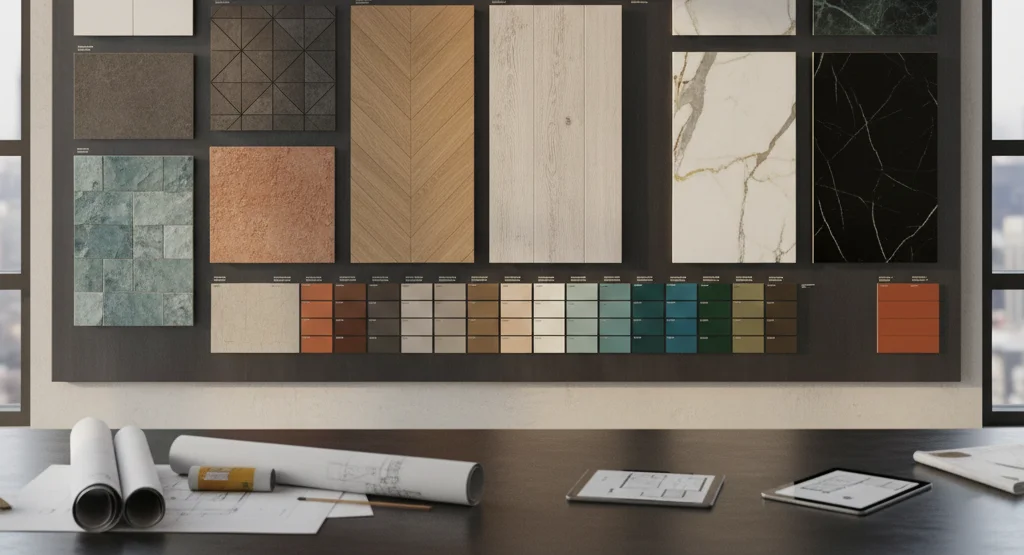
Clients often face a difficult choice between thousands of colors and textures for tiles, paints, marbles, etc. and this can lead to both increased costs and aesthetic regret.
3D rendering allows for the creation of a “virtual showroom” for Clients to see a side-by-side comparison of how various materials would look in their actual Space. Clients can see how luxury Italian marble compares to more affordable porcelain tile. They may learn that the affordable material looks almost identical in actual lighting, saving money while maintaining a great aesthetic.
Another reason 3D rendering cost savings matter is improved material selection.
3D Rendering Technology also Allows for Easy Experimentation without a Financial Investment. Clients can See What Five Different Paint Color Choices will Look Like on their Walls or Three Different Wood Grain Patterns on Their Floors with NO Financial Commitment to Buying Sample Paints or Planks.
Once clients approve the product, they buy exactly what they want. This prevents impulse purchases or regretting high-end products after seeing them on a large surface.
For example, if a client buys imported Italian tile and regrets it because it makes his/her bathroom look small and dark, he/she can see what it actually looks like before purchasing. He/she might opt for a lighter/Sourced Tile, which is less expensive and looks more aesthetically pleasing.
How 3D Rendering Improves Lighting Plans & Prevents Expensive Electrical Changes
Builders often undervalue lighting, so it becomes one of the cheapest elements. If lighting is not planned correctly, it will have a negative impact on how well the home works; correcting this after the fact results in a large financial burden.

3D renderings can digitally represent both natural and artificial lighting with great detail and accuracy. A quality 3D rendering demonstrates how sunlight moves around a room during various times during a day, which can assist in the detection of potential glare or shadowy areas
3D rendering helps visualize lighting and reduces costs.
In addition to these important uses, a 3D rendering also provides valuable assistance in planning where to position artificial light fixtures in a home. It helps to imagine where recessed lights should be placed, where chandeliers should hang, and where to position LED strip lighting in false ceilings. When a client looks at a 3D rendering and sees the lights “turned on” in the image, they can easily identify where they have too much or not enough light in their space.
Previsualizing lets you fix switch and fixture positions before the electrician wires them. It also prevents changes after the false ceiling is installed.
How does this save you money? Reworking electrical systems costs a lot. Relocating ceiling lights later costs five times more than doing them correctly from the start. You would have to cut out parts of the ceiling, rewire it, patch the drywall, and repaint it all over again. However, using 3D Rendering to visualize your design eliminates all of that risk.
How 3D Rendering Helps Optimize Furniture Layout & Save Cost
When planning an interior design budget, furniture accounts for a big cost, and selecting the wrong furniture can cost you big time. Many residential design projects face scale confusion. A sofa that looks right in a showroom may be enormous in a small living room. 3D rendering helps by showing each piece of furniture at actual scale in the room. Clients view realistic proportions and walking space, which ensures comfort.
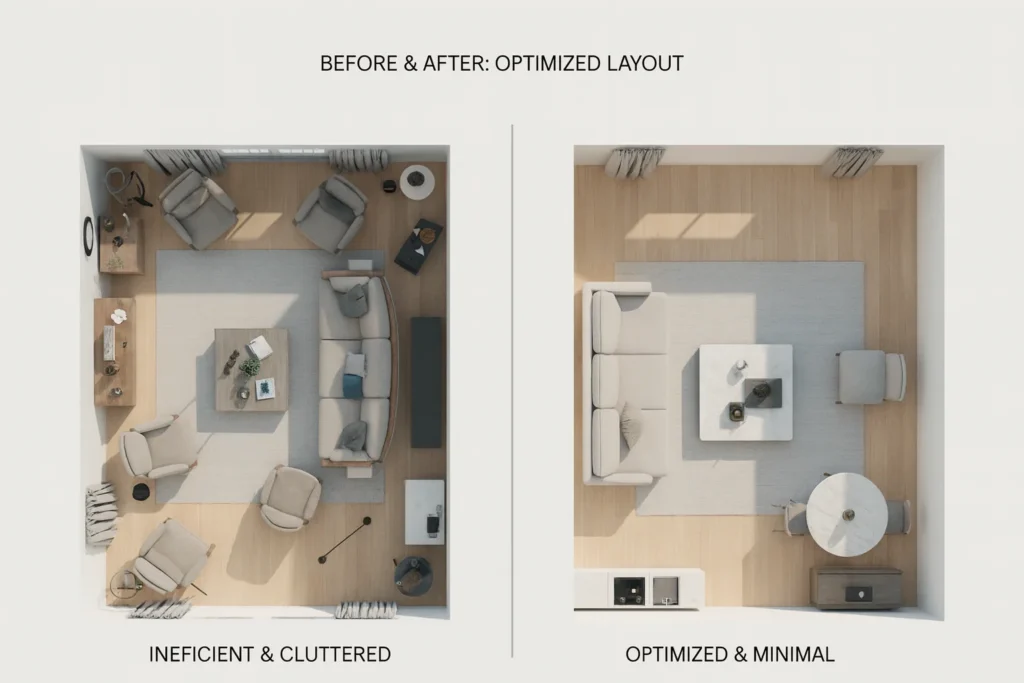
As a result, clients avoid purchasing oversized furniture that make a room feel congested or small pieces of furniture that will not fill up a room and create a sense of emptiness. For instance, this would validate that a king-sized mattress fits perfectly in the space between both of your nightstands and allows access to the closet door without obstruction.
Creating a digital layout allows clients to spend money only on items that fit perfectly. They avoid restocking fees, return shipping, and the stress of reselling unwanted items. Digital visualizations remove the guesswork out of furniture shopping and create a “buy it once, buy it right” philosophy.
3D Rendering Prevents Miscommunication Between Client & Contractor
Miscommunication causes most conflicts on construction sites. For example, a client requests a “rustic and modern” look, while a contractor may have a different view of the client’s request and may deliver on that interpretation through the services they provide to the client.
Laypersons often cannot understand traditional 2D drawings. These contain many lines and symbols that are difficult to interpret. A 3D render of the project conveys a visual understanding of how the completed project will look, so it provides a common understanding of the product. With a 3D render, the contractor knows exactly how the final product will look when completed.
3D renders help clients and contractors avoid misunderstandings caused by verbal descriptions or vague specifications. A 3D render will also save contractors the costs associated with re-doing a project that is “not what they expected.”
Overall, 3D rendering cost savings help both clients and contractors avoid expensive revisions.
For instance, if a client wants to paint the exterior of a building a “warm grey” and the contractor applies the paint in a “blue-toned grey,” the lack of a render can lead to the scenario where the paint goes up, the client doesn’t like it, and the client has to pay for the entire cost of repainting the building. 3D rendering avoids this entirely by locking in the specific aesthetic before a brush touches the wall.
Detecting Structural Conflicts Before They Become Expensive
While rendering is often associated with aesthetics, it plays a vital role in the technical structural integrity of a building, especially when integrated with BIM (Building Information Modeling).
In the 3D modeling phase, designers can detect collisions and conflicts that 2D drawings might miss.
- Engineers should check if a structural beam will cut through a window or lower a ceiling unexpectedly.
- Plumbing Conflicts: Seeing where pipes interfere with electrical runs or cabinetry.
- Door and Window Errors: Ensuring doors don’t swing into cabinetry or that windows align perfectly with exterior features.
Engineers and architects can solve these issues digitally once detected. If a conflict is found on site, construction stops. They may have to wait for engineers, reorder materials, or tear out work that was already completed.
Detecting these issues digitally reduces reconstruction costs and keeps the timeline on track.
Helps Clients Make Faster Decisions → Lower Designing Costs
Time is money, for both the client and the design team. A lingering design phase where the client is indecisive can rack up billable hours from architects and designers.
3D rendering accelerates the decision-making process. When a client sees a realistic image, they can instantly say “yes” or “no.” There is less deliberation and second-guessing.
- Faster Approval: Clear visuals lead to quicker sign-offs.
- Fewer Revisions: Because the client understands the design immediately, there are fewer rounds of “let’s try this” revisions.
- Lower Fees: Less time spent by the architect on endless modifications translates to lower overall design-phase costs.
Conclusion
In the modern construction landscape, 3D rendering is not an expense—it is an investment.
It provides a layer of security that traditional blueprints simply cannot offer. By preventing costly errors, optimizing material choices, ensuring accurate lighting and electrical planning, and eliminating the need for expensive rework, rendering pays for itself many times over.
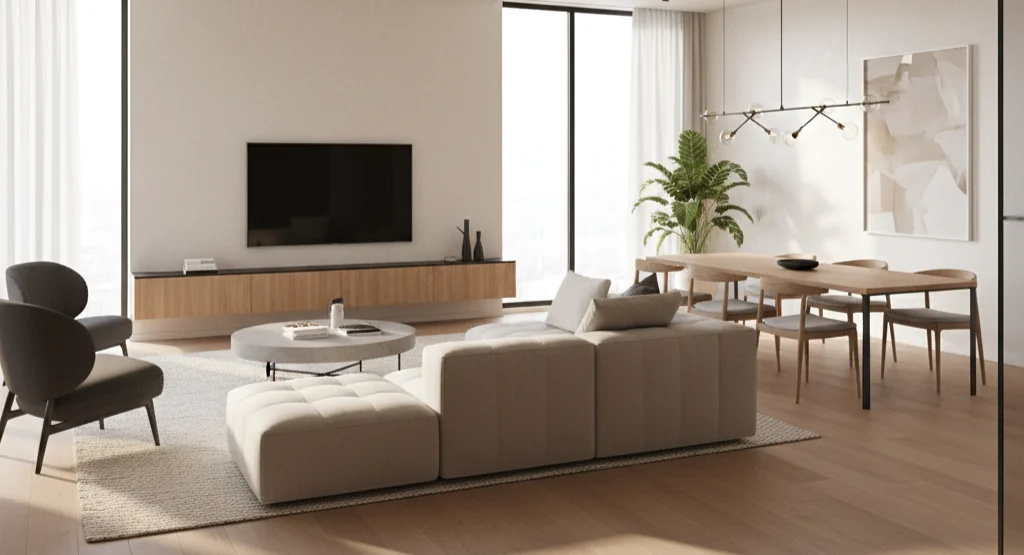
It allows clients to achieve their exact dream design without the nightmare of financial surprises. For anyone embarking on a construction or renovation project, choosing to invest in 3D rendering is the single smartest financial decision they can make to ensure their vision becomes reality, on time and on budget.
Learn more about 3D rendering standards here.
See our architectural visualization services here.